




How important was cobbler at the corner point?
How important was cobbler at the corner point?
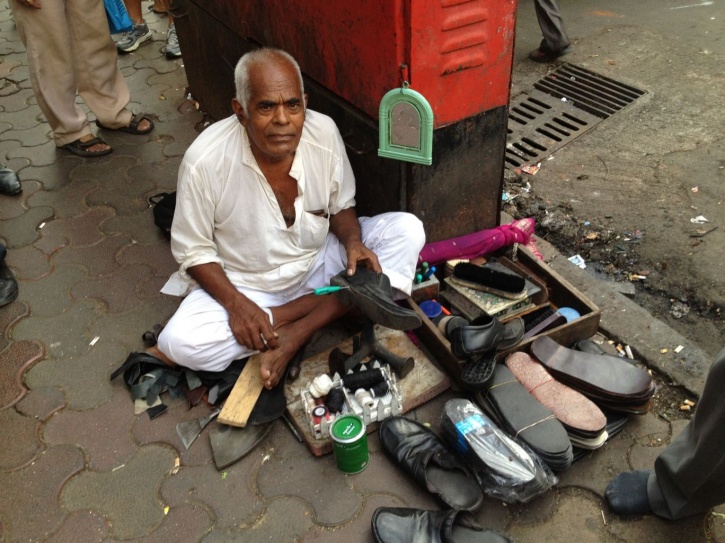
A certain dignity lies in all kinds of honest labour, and every labourer carries his own sense of dignity. We must respect the dignity of each human being. No one loses dignity as long as he earns his living through honest work, however poorly paid it may be.
There are numerous humble yet useful jobs that people do, and all of them play an important role in society. For instance, a street sweeper’s work may be self-effacing, yet one can easily imagine the plight of a city in his absence. The same is true of the cobbler sitting at the corner of a street.
We must learn to respect the dignity of labour, and at the same time, we should not feel ashamed of doing any kind of job, provided it brings honest earnings. This value must be inculcated among children so that they learn to respect every labourer, however poor he may be. Our country will truly develop only when we possess the right sense of values and are free from false pride.
You may have passed by a cobbler sitting at a street corner countless times, yet you may hardly have realised his importance. A cobbler performs a humble task and earns an honest living by mending shoes.
Sometimes, when you step out of your house to attend a grand party, well dressed and confident, your smile reflects your happiness. But after walking a short distance, disaster may strike—the strap of your shoe breaks. Suddenly, the first thought that comes to your mind is the corner where a cobbler might be sitting.
Once, I too found myself in such a situation. I had to attend a party at a distant place when the sole of my sandal came off. Limping, I walked nearly half a kilometre to a street corner where an old cobbler named Phuman was sitting. He was busy repairing shoes and sandals for people facing similar troubles. I had to wait for my turn.
When he took my sandal in his hands, he gave me a slightly sarcastic look and then examined it closely. Perhaps he was thinking that although I was well dressed, my sandals had put me in an awkward situation.
As he stitched the sandal, I wondered what would have happened had I not found a cobbler. I would have had to walk barefoot, carrying my broken sandal in hand—a truly embarrassing situation, inviting jokes from onlookers.
If we reflect deeply, a cobbler plays a crucial role in completing our attire. A fashion show is incomplete if models do not walk the ramp in designer shoes. Equal appreciation should be given to cobblers and shoemakers who contribute silently to the success of designers. Likewise, common people who wish to look smart from head to toe owe credit to the shoemakers who design and repair their footwear.
Frankly speaking, whatever the profession may be, hard-earned money—like that earned by a cobbler—brings dignity, peace of mind, and a sense of security for the future. Moreover, shoe repairing is a far more economical option when compared to buying a new pair of shoes.
Bargaining is a part and parcel of Indian life and culture, but one must not bargain over petty amounts. It deprives poor workers of their rightful earnings. I was reminded that cobblers are among the ten people with whom one should never bargain. These include tourist guides, alteration tailors, cobblers, shoe-shine boys, coolies, local vegetable vendors, roadside blind vendors, plumbers and electricians, painters, and doli-wallahs in the mountains.
I still remember the importance of the old-timer cobbler Phuman, with whom I never bargained. Had he not been available that day, I would have found myself in a most uncomfortable and embarrassing situation.
If you want, Dido, I can also:
- Shorten this for a newspaper column
- Make it more reflective or philosophical
- Add a stronger concluding paragraph
- Give it a more literary or journalistic tone
Just tell Gigo 😊